The process of school quality improvement is multifaceted and involves several key phases aimed at fostering educational excellence. At the heart of this process lies the School Quality Assessment and Assurance Framework (SQAAF), which is designed to help schools assess and improve their existing practices. However, there is a common misconception that completing the self-assessment on the SQAAF portal alone constitutes the full implementation of SQAAF. This blog will delve into the various phases of the SQAAF process, highlighting why self-assessment is just one part of the broader implementation journey.
SQAAF Process Phases: Beyond the Self-Assessment
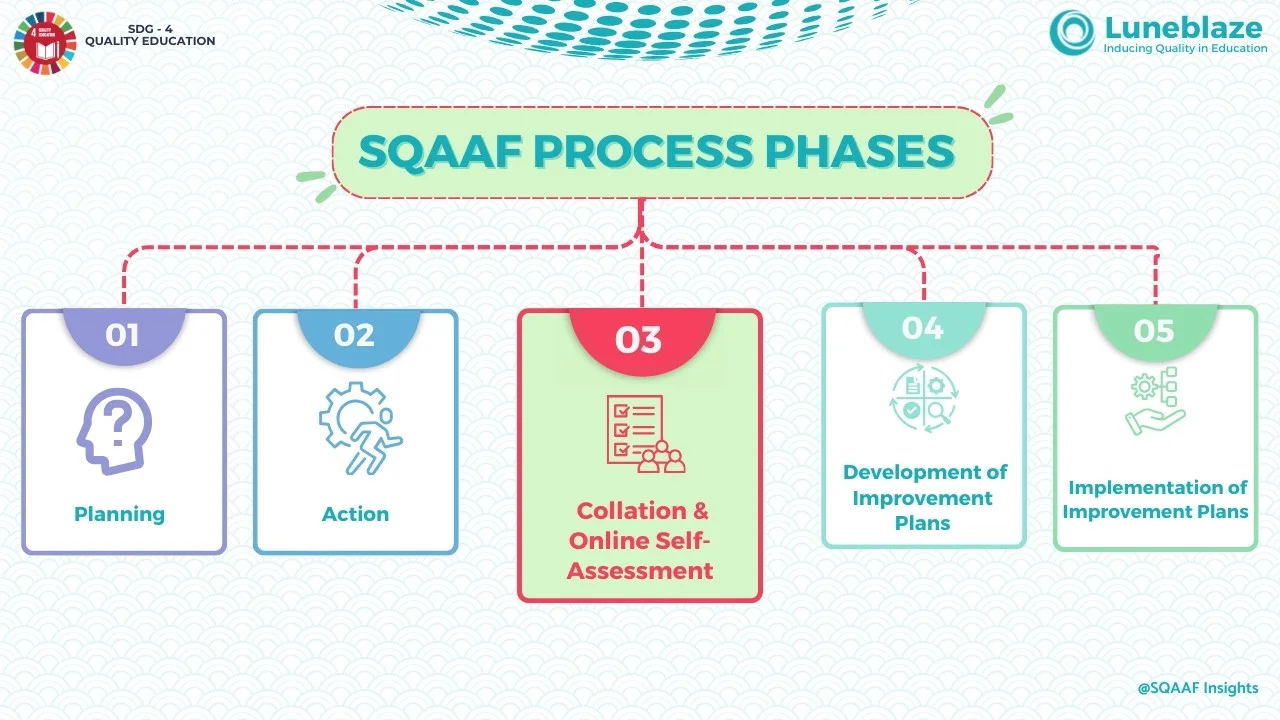
The SQAAF process is divided into five key phases, each critical to the overall goal of improving school quality. Let's explore these phases in detail:
1. Planning- The planning phase serves as the foundation for assessing and enhancing the school’s practices. It involves understanding the existing practices and determining how they align with the standards outlined in the SQAAF. Planning is a strategic phase where objectives are set for the upcoming phases.
2. Action - During the action phase, schools review their current practices and evaluate how well they align with the SQAAF standards. This phase also identifies areas where practices fall short of the framework's expectations, thereby marking the beginning of a reflective process that prepares schools for deeper analysis.
3. Collation and Online Self-Assessment The collation and online self-assessment phase is where schools evaluate their performance and practices systematically against the SQAAF criteria. The self-assessment is a crucial part of the process but should not be mistaken as the entirety of the SQAAF implementation. This is a self-reflective activity aimed at identifying strengths and areas for improvement based on the standards set by SQAAF.
4. Development of Improvement Plans After completing the self-assessment, schools move into the development phase, where they create actionable improvement plans. These plans outline areas that need enhancement, the proposed actions for improvement, and clear timelines for achieving these goals. This phase is crucial in ensuring that there is a clear direction for improvement.
5. Implementation of Improvement Plans The implementation phase is where schools put their improvement plans into action. This is a dynamic phase where the proposed changes are executed in real-time to address the gaps identified during the self-assessment. It involves monitoring progress, making necessary adjustments, and ensuring that the desired improvements are achieved effectively.
SQAAF Self-Assessment Process: Not the Whole Picture
While the self-assessment on the SQAAF portal is a significant step, it does not represent the entire SQAAF implementation process. The self-assessment is one of the critical activities that schools must engage in to evaluate their alignment with the framework’s standards. This process involves:
- Formation of the Core Learning Team (CLT): A team of key educators and administrators is formed and trained to lead the self-assessment and improvement efforts.
- Document Collection: Necessary documents and evidence are gathered to support a comprehensive evaluation of school practices.
- Completing the Self-Assessment on the CBSE SQAAF Portal: Schools use the portal to assess their own strengths and areas that need improvement based on specific SQAAF standards.
The Importance of Improvement Plans and Implementation
The true value of the SQAAF process lies not in just completing the self-assessment, but in the development and implementation of improvement plans. Once the self-assessment is complete and gaps are identified, schools must create structured, actionable plans to address those gaps. These plans need to be carefully executed with clearly defined goals and timelines. Without this step, the self-assessment process remains incomplete, and the desired outcomes of the SQAAF framework will not be realized.
SQAAF Report (SQAAR): A Reflection of Efforts
After the self-assessment and the implementation of improvement plans, a School Quality Assessment and Assurance Report (SQAAR) is generated. This report reflects the school's progress and practices based on the information provided during the CBSE evaluation visit. The SQAAR helps schools understand the effectiveness of their implementation efforts and highlights areas for further improvement.
In conclusion, while completing a self-assessment on the SQAAF portal is an important activity within the broader framework, it is not synonymous with the full implementation of SQAAF. Schools must recognize that the SQAAF process involves careful planning, action, development of improvement plans, and most importantly, the effective implementation of these plans to achieve continuous school quality improvement. Self-assessment is just the beginning—true transformation comes from the steps that follow.
To support these efforts, Luneblaze offers tailored support by providing a comprehensive end-to-end solution to Schools for all their accreditation criteria needs be it Documents & Evidence Creation, Self- Assessment Filing support on CBSE SQAAF Portal, Faculty Trainings, Audits and Consultancy Support. With the help of Luneblaze’s AI enabled solutions, institutions can organize and manage all their data related to accreditation and assessments like SQAAF for schools.
Together, let's raise educational standards. Partner with Luneblaze for SQAAF success. Reach out: sqaa@luneblaze.com