Imagine a classroom where students aren’t just reading from textbooks, but actively engaging with models, digital simulations, maps, and games. One where a visual learner grasps a complex concept through an animated video, while another student builds confidence using flashcards and group activities. In today’s evolving educational landscape, Teaching-Learning Materials (TLMs) have become essential in making learning dynamic, inclusive, and student-centered.
As schools align with the goals of NEP 2020 and SQAAF, integrating effective TLMs into everyday instruction is key to raising educational quality and equity across India.
What are Teaching-Learning Materials?
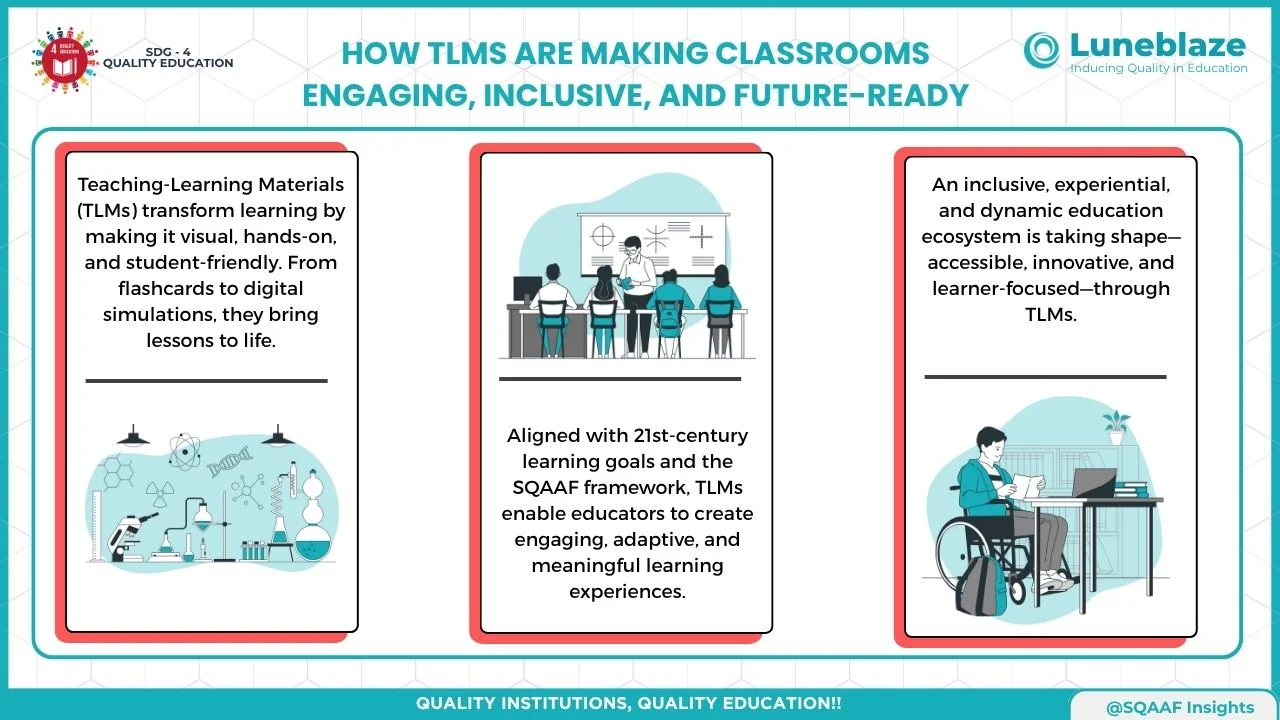
Teaching-Learning Materials (TLMs) are the diverse tools and resources used by educators to enhance classroom instruction. These range from textbooks, videos, charts, and flashcards to digital tools like simulations, educational software, and interactive aids.
By offering multiple modes of engagement—visual, auditory, kinesthetic—TLMs support a wide variety of learning styles, helping students grasp and retain complex ideas more effectively.
Core Features of Good TLMs
Familiar & Relatable: Materials connect to students' lived experiences and help them build on prior knowledge.
Concept-Focused: Simplify abstract topics into understandable and relatable forms.
Visually Appealing: Use of colors, textures, and creative designs to keep learners engaged.
Portable & Safe: Easy to handle, move, and store—while being child-friendly and durable.
Multipurpose: Reusable across different subjects and grades, maximizing classroom utility.
Why TLMs Matter in Today’s Classrooms
TLMs enhance the learning experience and offer key benefits such as:
Enhanced Engagement: Stimulate curiosity and motivate students through interactive methods.
Clarity in Instruction: Make abstract concepts easier to explain and understand.
Personalized Learning: Allow teachers to differentiate instruction based on students’ needs.
Improved Retention: Multi-sensory learning helps students remember information longer.
Stronger Classroom Structure: Provide consistent routines and support lesson planning.
Active Student Participation: Encourage students to think critically, explore, and collaborate.
Types of Teaching-Learning Materials
Textbooks: Foundational content for subjects; available in digital and print formats.
Teaching Aids: Includes smart boards, educational apps, games, and interactive videos.
Laboratory Equipment: Tools like microscopes and models used for hands-on learning in science.
Maps & Globes: Visual tools for learning geography and environmental science.
Art & Craft Materials: Encourage creativity, fine motor skills, and self-expression.
Software & Simulations: Digital programs that create virtual learning experiences.
Musical Instruments: Aid in rhythm, coordination, and expression in music education.
Physical Education Equipment: Promotes health, discipline, and teamwork.
Language Learning Tools: Flashcards, apps, and books for building vocabulary and grammar.
Managing TLMs Effectively
Ensure sufficient availability of TLMs in the classroom.
Involve students in collecting local materials when appropriate.
Assign student teams for setup and maintenance.
Use classroom spaces creatively for activities (walls, floors, outdoors).
Maintain a record of TLM usage, condition, and storage.
Conduct monthly checks to restock and organize materials.
How TLMs Align with SQAAF Domains
The School Quality Assessment and Assurance Framework (SQAAF) emphasizes holistic education. TLMs directly support this through:
Domain 1: Curriculum, Pedagogy & Assessment
Enable differentiated, engaging instruction aligned with learning outcomes.Domain 2: Infrastructure
Require physical and digital readiness to integrate TLMs effectively.Domain 3: Human Resources
Promote teacher training and resource planning for effective classroom delivery.Domain 4: Inclusive Practices
Support learners of all abilities through multisensory and adaptive resources.Domain 5: Management & Governance
Encourage structured planning, procurement, and monitoring of resource usage.Domain 6: Leadership
Require visionary leadership to integrate innovative tools and monitor impact.Domain 7: Beneficiary Satisfaction
Improve student learning experiences and promote parent and teacher satisfaction.
Why the Government Supports TLM Integration
Aligned with the NEP 2020 vision, the Indian government promotes inclusive and technology-integrated education. Initiatives like PM eVidya, DIKSHA, and SWAYAM emphasize the need for diverse learning materials. TLMs play a pivotal role in enabling:
Differentiated and inclusive learning
Active and experiential education
Improved student outcomes
Equitable access to quality education
Holistic learning aligned with 21st-century skills
In conclusion, TLMs are not just accessories to teaching—they are core enablers of better learning. As India transitions to a more inclusive, technology-empowered, and learner-focused system, teaching-learning materials help bridge gaps, spark curiosity, and elevate classroom experiences.
Schools that prioritize TLM integration align better with NEP 2020, fulfill SQAAF mandates, and, most importantly, empower learners to thrive in a rapidly changing world.
To assist schools in their SQAAF Journey, Luneblaze provides a comprehensive AI-enabled end-to-end solution to schools for all their accreditation criteria needs, be it documents & evidence creation, self-assessment filing support on the CBSE SQAAF portal, workflow management, faculty trainings, audits, and consultancy support.