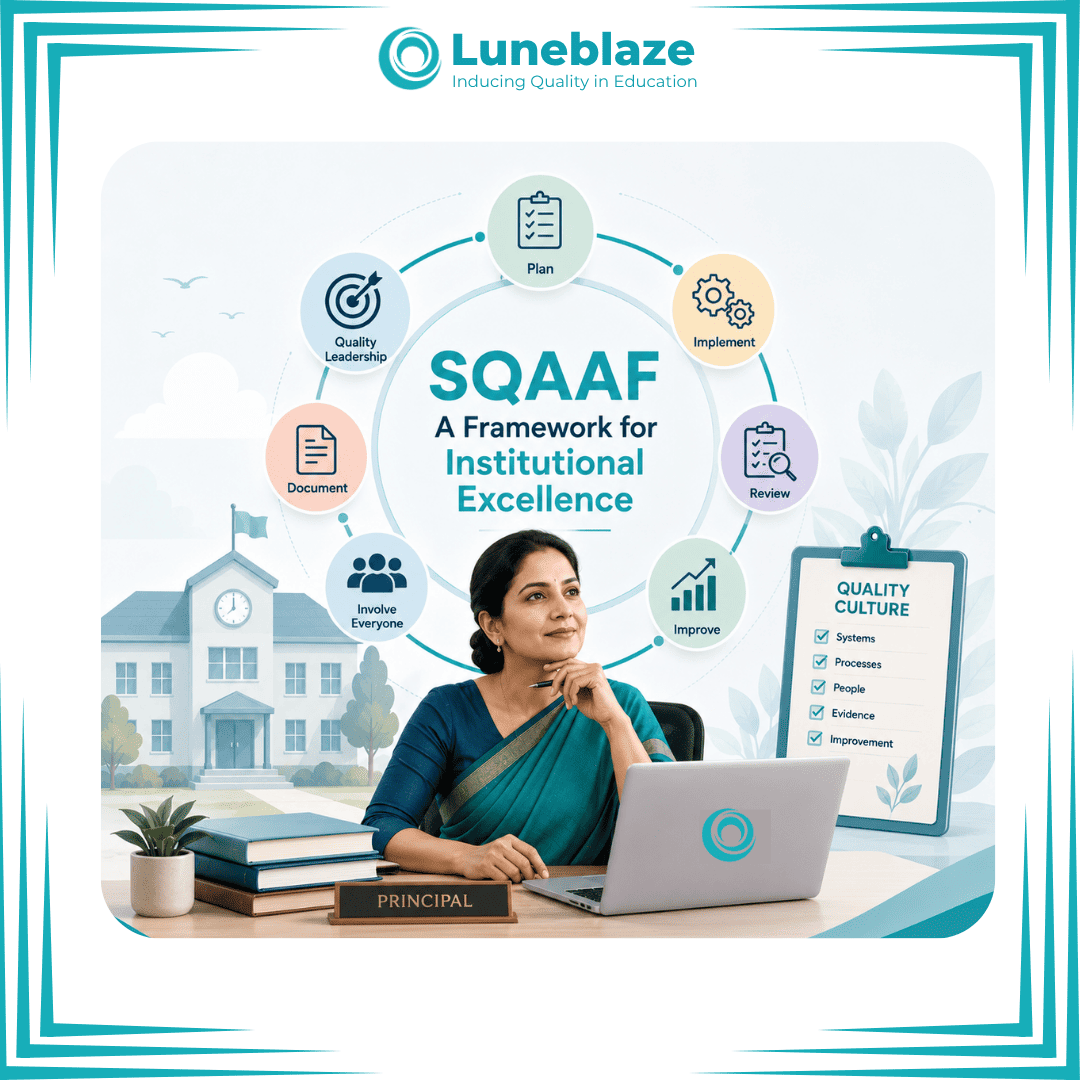
SQAAF self-assessment is much more than filling out an online form. It is a comprehensive reflection of how effectively a school functions across academics, infrastructure, governance, leadership, inclusion, human resources, and stakeholder satisfaction.
Many schools begin their self-assessment only to realize that important policies are outdated, evidence is scattered across departments, or practices are being implemented without proper documentation. These small gaps often lead to lower scores—not because the school lacks quality, but because it cannot demonstrate it effectively.
The most successful schools treat SQAAF as a continuous quality improvement process rather than a one-time compliance exercise. They verify their systems, strengthen documentation, identify gaps, and ensure that every claim is supported by authentic evidence before beginning the self-assessment.
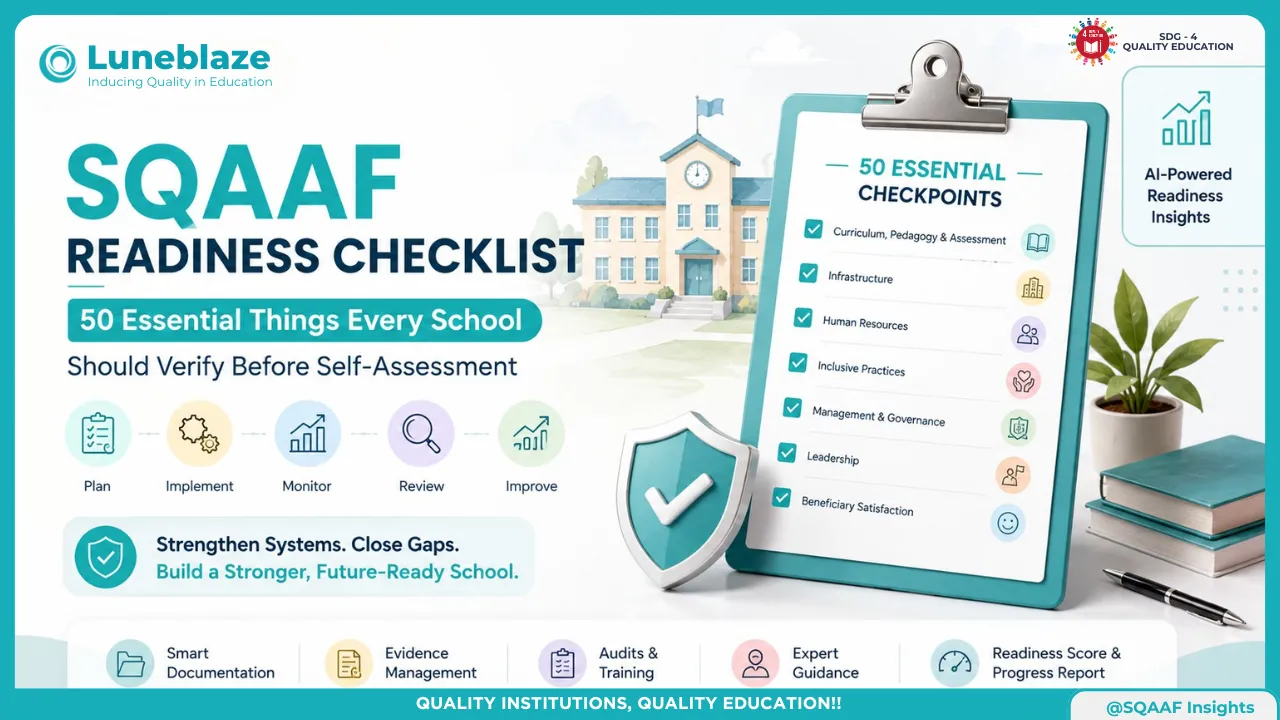
To help schools prepare confidently, here is a practical checklist of 50 essential things every school should verify before starting its SQAAF self-assessment.
Domain 1: Curriculum, Pedagogy & Assessment
1. Vision and Mission Alignment
Ensure your school's Vision and Mission are clearly defined and reflected in academic planning and institutional practices.
2. Annual Curriculum Plan
Verify that the Annual Curriculum and Pedagogical Plan is updated and effectively implemented.
3. Lesson Planning
Ensure lesson plans are prepared, reviewed, and aligned with curriculum objectives.
4. Learning Outcomes
Verify that learning outcomes are clearly identified and monitored across all grades and subjects.
Ensure competency-based, experiential, and learner-centric practices are consistently implemented. Verify that assessment practices are guided by a documented and well-implemented assessment policy. Ensure student progress is regularly tracked, reviewed, and supported through appropriate interventions. Verify that teaching-learning resources are adequate, accessible, and effectively utilized. Ensure the school has a documented plan for infrastructure development and improvement. Verify that safety measures, emergency preparedness, and disaster management systems are in place. Ensure preventive maintenance schedules and repair records are regularly maintained. Verify that laboratories, libraries, ICT facilities, and activity spaces effectively support learning. Ensure the campus provides a safe, accessible, and inclusive environment for all learners. Verify that asset, stock, and inventory records are updated and regularly reviewed. Ensure sanitation, drinking water, waste management, and hygiene standards are consistently maintained. Verify that infrastructure is periodically reviewed and improved based on institutional needs. Verify that systems for teacher recruitment, professional development, performance appraisal, and recognition are effectively implemented. Ensure programmes supporting students' academic, co-curricular, leadership, and well-being are documented and regularly reviewed. Verify that parents actively participate through orientation programmes, feedback mechanisms, PTMs, and school engagement initiatives. Ensure alumni are connected through mentorship, career guidance, institutional activities, and contribution to school development. Verify collaborations with community organizations and outreach initiatives that strengthen the school's social responsibility. Ensure feedback is regularly collected from teachers, students, parents, alumni, and the community, with documented action taken. Verify that stakeholder engagement is periodically reviewed and strengthened through measurable improvement plans. Verify that the school has a documented policy promoting inclusive education. Ensure appropriate support systems are available for learners with varied educational needs. Verify that counselling and well-being initiatives are accessible and regularly conducted. Ensure programmes promoting equity, inclusion, and gender sensitivity are effectively implemented. Verify that infrastructure and learning resources support inclusive participation. Ensure parents are actively involved in supporting inclusive education practices. Verify initiatives promoting students' physical, emotional, and social well-being. Verify that institutional goals and improvement plans are clearly documented and implemented. Ensure all institutional policies are updated, communicated, and periodically reviewed. Verify that committees, roles, and responsibilities are clearly defined and functional. Ensure financial planning and resource allocation support institutional priorities. Verify that all statutory approvals and compliance requirements are up to date. Ensure regular monitoring and review mechanisms support continuous improvement. Verify that institutional documents are systematically organized and easily accessible. Ensure leadership practices align with the school's vision and long-term goals. Verify that strategic initiatives are planned, implemented, and periodically reviewed. Ensure institutional decisions are documented through structured meetings and follow-up actions. Verify initiatives that promote innovation and continuous institutional growth. Ensure academic and administrative performance is regularly monitored and evaluated. Verify leadership development and succession planning initiatives are effectively implemented. Ensure structured student feedback is collected, analyzed, and acted upon. Verify parent satisfaction surveys and documented action taken reports. Ensure employees have opportunities to share feedback that contributes to institutional improvement. Verify alumni engagement and feedback mechanisms are regularly maintained. Ensure feedback from community stakeholders is considered in school improvement initiatives. Verify transparent grievance redressal mechanisms for all stakeholders. Ensure stakeholder feedback translates into measurable improvements through regular review and action planning. Completing these 50 checkpoints is not about achieving perfection—it's about understanding your school's strengths, identifying areas for improvement, and building systems that support sustainable quality. SQAAF evaluates not only what a school has, but also how effectively it plans, implements, monitors, reviews, and continuously improves its practices. Schools that invest time in strengthening these systems before self-assessment are better prepared to demonstrate institutional excellence with confidence. SQAAF readiness is a continuous journey of strengthening systems, not a one-time documentation exercise. Schools that assess their preparedness early are better positioned to achieve meaningful and sustainable quality outcomes. We, at Luneblaze supports schools at every stage of this journey with AI-powered documentation, evidence management, audits, training, and expert guidance. Building on these capabilities, our SQAAF Readiness Score and Progress Report provide schools with real-time insights into their accreditation readiness, helping them identify gaps, monitor progress, and stay prepared throughout the year.5. Competency-Based Learning
6. Assessment Policy
7. Student Progress Monitoring
8. Teaching-Learning Resources
Domain 2: Infrastructure
9. Infrastructure Development Plan
10. Safety & Security
11. Maintenance Systems
12. Learning Facilities
13. Accessibility & Inclusivity
14. Asset Management
15. Cleanliness & Hygiene
16. Infrastructure Monitoring
Domain 3: Human Resources
17. Teacher Development
18. Student Development
19. Parent Engagement
20. Alumni Engagement
21. Community Engagement
22. Stakeholder Feedback
23. Continuous Improvement
Domain 4: Inclusive Practices
24. Inclusive Education Policy
25. Support for Diverse Learners
26. Student Counselling
27. Equity & Gender Sensitivity
28. Accessible Learning Environment
29. Parent Collaboration
30. Student Well-being
Domain 5: Management & Governance
31. School Development Plan
32. School Policies
33. Governance Structure
34. Financial Planning
35. Regulatory Compliance
36. Internal Review Systems
37. Documentation Management
Domain 6: Leadership
38. Leadership Vision
39. Strategic Planning
40. Decision-Making Processes
41. Innovation & Best Practices
42. Performance Monitoring
43. Capacity Building
Domain 7: Beneficiary Satisfaction
44. Student Feedback
45. Parent Feedback
46. Staff Feedback
47. Alumni Feedback
48. Community Feedback
49. Grievance Redressal
50. Continuous Quality Improvement
Beyond the Checklist