Walking through the corridors of a school, one can observe the vibrant energy of students engaged in learning, teachers dedicatedly shaping young minds, and administrators ensuring smooth operations. However, beneath this dynamic environment lies an essential question—how does a school measure its effectiveness in delivering quality education? The School Quality Assessment and Assurance Report (SQAAR) provides a structured framework to evaluate and enhance school performance, ensuring alignment with CBSE standards. This report, generated for schools visited by a CBSE-nominated team, serves as a comprehensive tool to assess institutional progress, identify strengths, and recommend improvements.
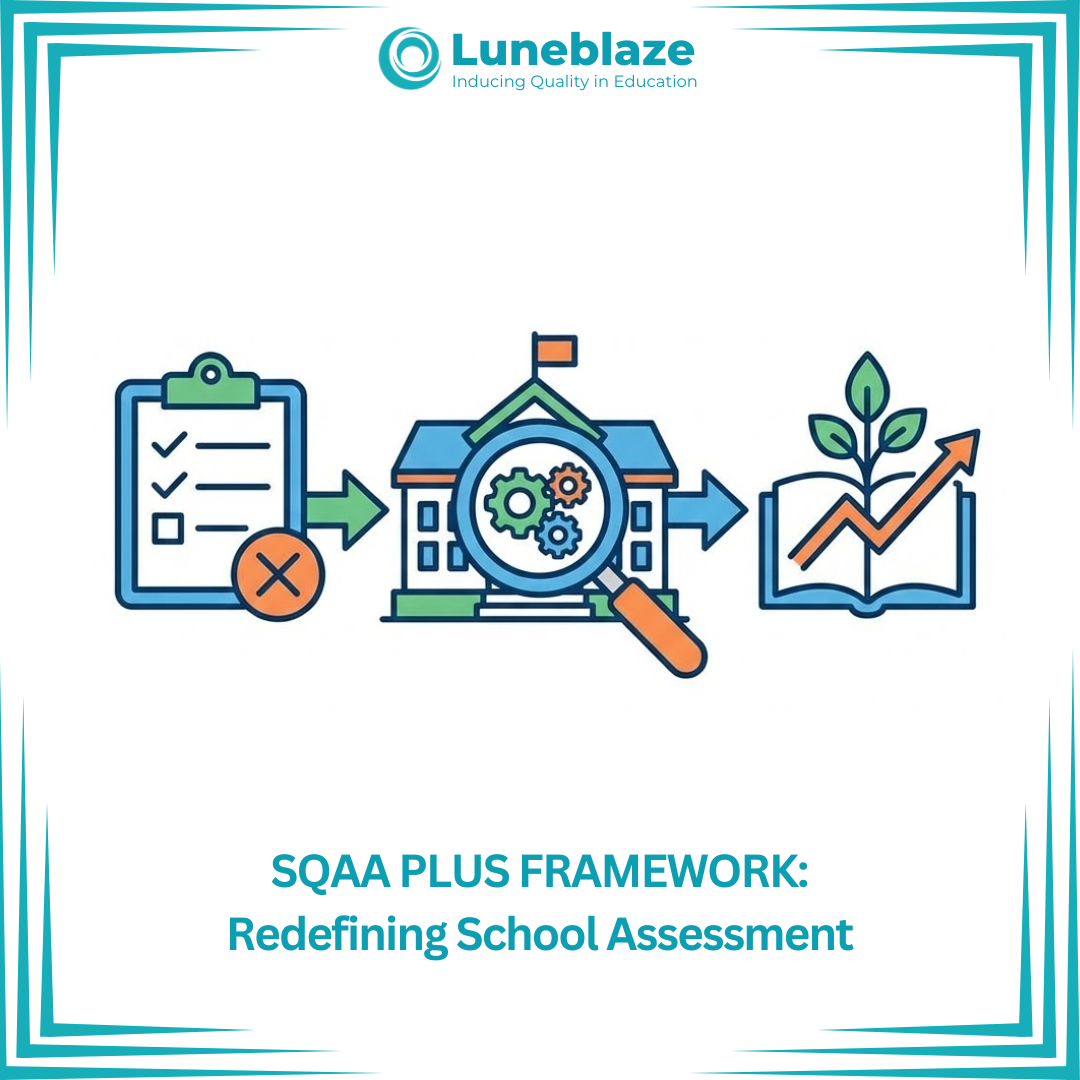
SQAAR is not just a compliance document but a transformative mechanism guiding schools from external evaluations to self-assessment. Traditionally, school leaders have relied on data analysis for reporting to management or the board. With SQAAR, schools shift towards proactive engagement, where teams analyze data to improve learner outcomes. This transition from external motivation to intrinsic motivation fosters a culture of self-improvement, where schools take ownership of their growth journey. Evaluations evolve from end-of-year reviews in selected domains to a systematic, connected approach conducted at regular intervals, aligned with the school's vision and mission.
The report is rooted in a holistic perspective, moving away from piecemeal improvements or quick fixes towards whole-school transformation. It enables schools to develop a common frame of reference for assessing quality, facilitating structured action points to enhance educational processes. By combining quantitative and qualitative dimensions, SQAAR provides a well-rounded evaluation of a school’s performance. Supporting documents submitted by the school form the basis for quantitative scoring, ensuring objective analysis. Meanwhile, qualitative insights highlight commendations and recommendations, offering meaningful feedback for institutional growth.
A distinctive aspect of SQAAR is its ability to highlight domain-wise strengths and areas requiring attention. This approach ensures that schools do not merely meet regulatory requirements but actively strive for excellence in all aspects of education. The evaluation process fosters an environment where evidence-based decision-making becomes the norm, leading to continuous improvements in teaching methodologies, infrastructure, and student outcomes.
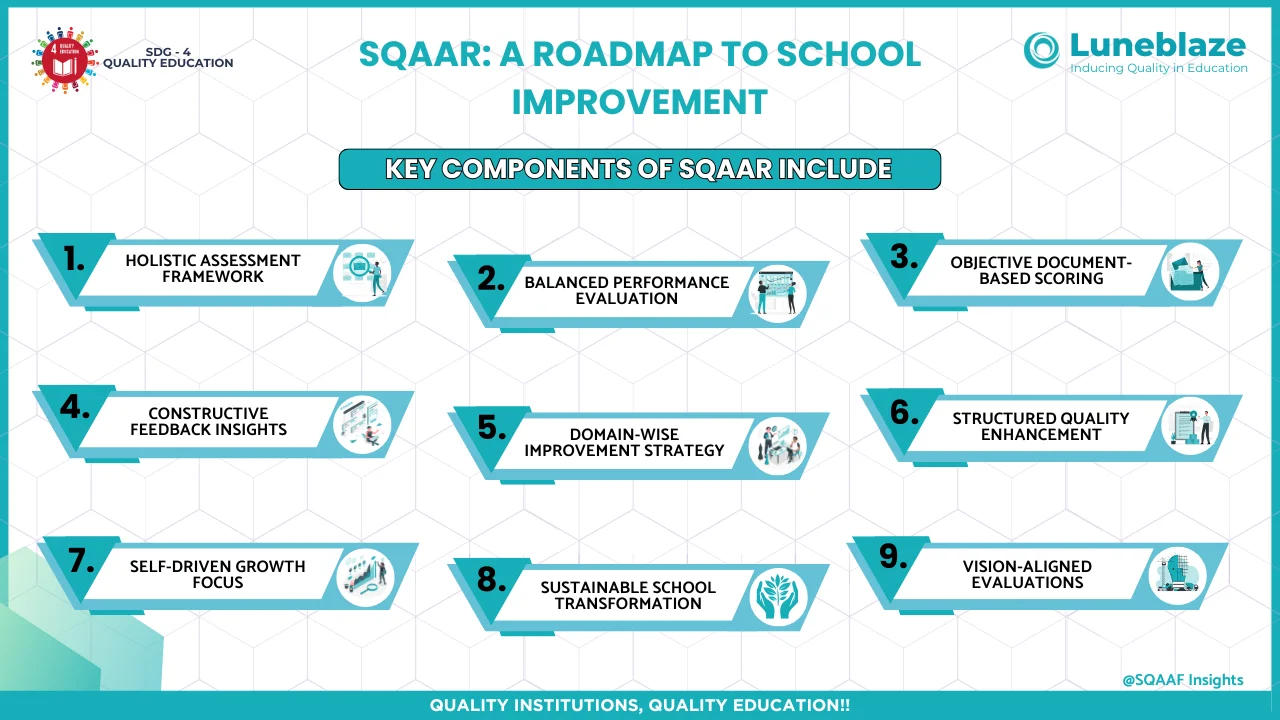
The key components of SQAAR include:
Holistic Assessment Framework
A comprehensive evaluation covering seven key domains, including leadership, governance, teaching, infrastructure, and student outcomes. This ensures a well-rounded analysis of school quality.Balanced Performance Evaluation
A combination of quantitative scores and qualitative insights, providing an objective yet detailed assessment of school performance beyond just numbers.Objective Document-based Scoring
Assessment based on supporting documents submitted by schools, ensuring fairness, transparency, and credibility in the evaluation process.Constructive Feedback Insights
Detailed commendations and recommendations that guide schools in refining strategies and improving overall quality.Domain-Wise Improvement Strategy
Identification of strengths and areas needing attention within each domain, allowing schools to prioritize improvements effectively.Structured Quality Enhancement
Guidelines to streamline and enhance school management, teaching methodologies, and governance for long-term progress.Self-Driven Growth Focus
Encouragement of self-assessment over external evaluation, fostering a culture of continuous improvement and accountability.Sustainable School Transformation
Emphasis on deep, systemic reforms rather than quick fixes, ensuring lasting improvements in teaching, governance, and student outcomes.Vision-Aligned Evaluations
Alignment of assessments with a school’s mission and goals, reinforcing institutional values while driving meaningful development.
Through this rigorous yet constructive evaluation, schools transition from a mindset of ‘I think I know’ to ‘We know and have evidence to support it.’ The shift from external accountability to self-motivation encourages schools to take charge of their development, fostering a sustainable model of quality assurance. SQAAR provides broad guidance, helping schools manage and enhance qualitative processes while maintaining alignment with CBSE’s overarching objectives.
By embracing the principles of SQAAR, schools gain a structured pathway to elevate their educational standards. The report not only provides an assessment of current practices but also serves as a roadmap for future improvements. In an era where quality education is paramount, SQAAR ensures that schools are well-equipped to provide meaningful learning experiences, ultimately shaping the future of education.
To support these efforts, Luneblaze provides a comprehensive AI-enabled end-to-end solution to schools for all their accreditation criteria needs, be it documents & evidence creation, self-assessment filing support on the CBSE SQAAF portal, faculty trainings, audits, and consultancy support. With the help of Luneblaze’s AI-enabled solutions, institutions can organize and manage all their data related to accreditation and assessments like SQAAF for schools.
Together, let’s raise educational standards. Partner with Luneblaze for SQAAF success. Reach out: sqaa@luneblaze.com