Imagine walking into a school every day, where every hallway is secure, every corner is well-lit, and every child feels safe, not just from external dangers but within the very walls of their school. Parents drop their children off in the morning, confident that the institution they trust for their child’s education is also a place where safety, well-being, and protection are top priorities. As the world becomes more aware of the importance of safeguarding children in every space they occupy, schools too are stepping up their efforts to provide an environment where students can learn, grow, and thrive without fear. In this effort, the School Safety Committee (SSC) plays a pivotal role.
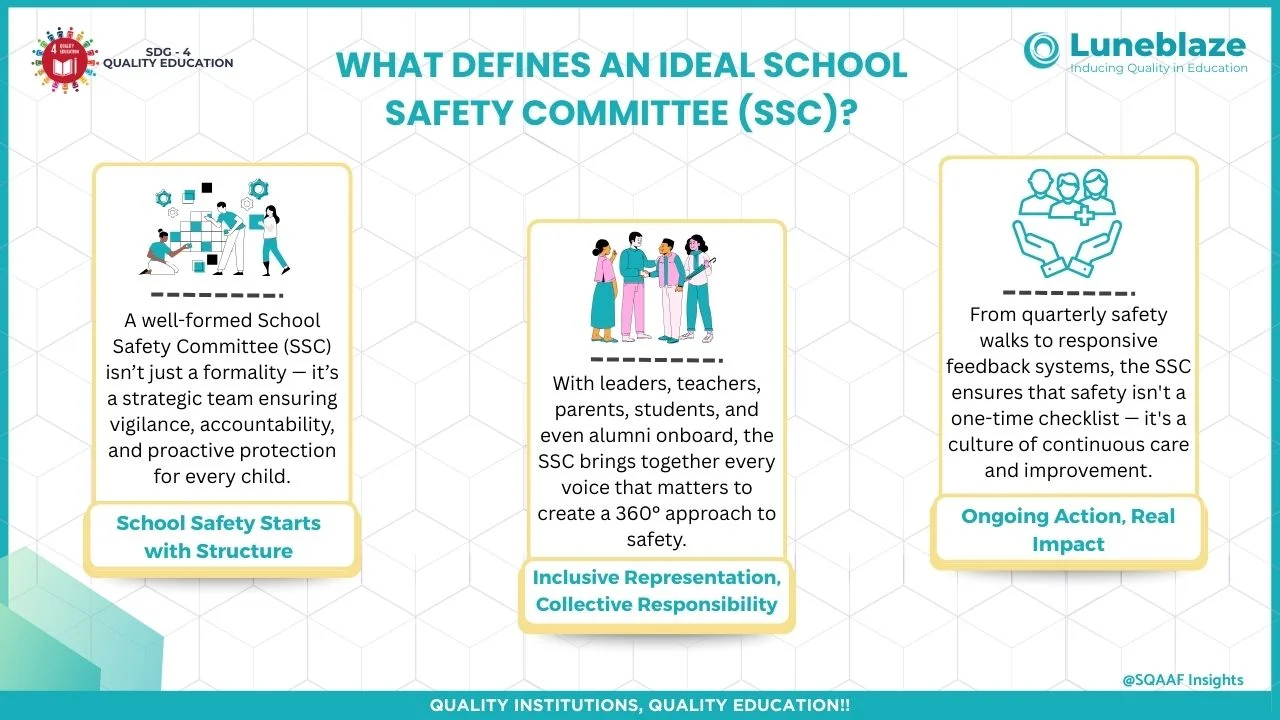
The constitution of a School Safety Committee is not just a formality but a strategic, structured effort to ensure that all aspects of a child’s safety within the school are meticulously monitored and improved. The idea behind this committee is not just about addressing immediate concerns but about building a framework of support and vigilance that works proactively and effectively to maintain a secure environment.
Key Members and Their Roles
The success of a School Safety Committee lies in its structure. When each member plays their part effectively, it ensures that no aspect of safety is left unaddressed. The committee should be composed of key stakeholders within the school environment. Here’s a look at who should be included and why:
Chairperson: Head of Institution
The Chairperson, typically the principal or headmaster of the school, is the central figure in ensuring the overall direction of safety-related initiatives. As the head of the institution, the principal holds the authority to make crucial decisions, ensuring that the school’s policies align with best practices for student safety. Their leadership is fundamental in creating a culture of safety that permeates the entire institution.Student Safety Officer (SSO) or Child Protection Officer (CPO)
An essential member of the committee is the SSO or CPO, who ensures that the school's practices and environment prioritize the well-being of students. This individual is crucial in identifying safety concerns, implementing child protection measures, and acting as a bridge between the administration, teachers, parents, and students. The CPO must be a permanent staff member with a background in child psychology or counseling, ensuring they are equipped to handle sensitive issues related to student safety.Faculty Representatives
To ensure diverse perspectives, the committee includes two or more faculty representatives, at least one of whom must be a female staff member. It’s important to have representatives from various school levels (primary, middle, and senior school) to provide a comprehensive understanding of the safety needs at different educational stages. These faculty members are critical in bringing attention to specific safety concerns that may arise within different age groups or areas of the school.Parent Representatives
Including parents in the safety committee is a valuable addition, as they bring insights into the concerns of the wider school community. Two parent representatives are needed, with one potentially being part of the School Management Committee (SMC) or Parent Teachers Association (PTA). Having parents rotate on the committee ensures fresh perspectives are brought in regularly, and their term is limited to a year, fostering broader participation.Student Representatives
Perhaps one of the most important members are the student representatives. Two students from the senior wing (preferably one boy and one girl) are involved in the committee, giving them a voice in the safety decisions that directly affect their school experience. This inclusion empowers students to take an active role in promoting safety and helps the committee to remain aware of issues from the student body’s perspective.Alumni Representatives (Optional)
Though optional, including alumni can be a beneficial addition to the committee. These individuals, who once walked the halls as students, often bring passion and a sense of ownership towards the school’s well-being. They can provide valuable insights and, as long as they are willing to dedicate time to the cause, their contributions to the committee’s mission can be invaluable.
How SQAAF Recognizes the School Safety Committee
The role of the School Safety Committee goes beyond internal vigilance—it holds significance within the national quality framework set by CBSE as well. The committee aligns with multiple elements of the School Quality Assessment and Assurance Framework (SQAAF), reinforcing its relevance in both day-to-day operations and formal accreditation processes:
Domain 1: Curriculum, Pedagogy & Assessment
The School Safety Committee plays an essential role in creating a secure and supportive environment that is conducive to effective curriculum delivery and student learning. Safety in classrooms and common areas ensures that pedagogical activities can take place without fear, disruption, or distress. Moreover, the SSC can collaborate with faculty to integrate safety education, awareness about child rights, and life skills into the school curriculum. Through activities like mock drills, fire safety demonstrations, and counselling sessions facilitated by the Child Protection Officer (CPO), the committee supports experiential and holistic learning. Additionally, by promoting psychological safety, the SSC helps reduce performance anxiety and stress during assessments, enabling students to focus on their academic growth.
Domain 2: Infrastructure
The SSC is deeply involved in maintaining and improving the physical infrastructure of the school with safety as a core focus. By conducting quarterly safety walks, the committee inspects classrooms, playgrounds, stairwells, washrooms, and other areas to identify hazards or unsafe conditions. It ensures that essential facilities such as fire extinguishers, emergency exits, CCTV cameras, and first-aid kits are in place and functioning. The SSC also evaluates whether the infrastructure is inclusive and student-friendly, ensuring that ramps, handrails, and signage are accessible to all. This ongoing vigilance helps maintain a safe learning environment that aligns with infrastructure-related quality benchmarks of the SQAAF framework.
Domain 3: Human Resources
Within the domain of Human Resources, the SSC emphasizes the importance of trained, aware, and responsible staff in upholding student safety. The appointment of a permanent employee as the Child Protection Officer reflects a commitment to long-term safety culture and institutional knowledge. This officer, ideally experienced in counselling or child development, works alongside other faculty to ensure that staff are well-versed in handling safety concerns, child protection laws, and crisis management. By involving both teaching and non-teaching staff in the SSC, the committee encourages a sense of collective responsibility and continuous professional development, contributing to a safer and more responsive school environment.
Domain 4: Inclusive Practices
The SSC actively supports the school’s inclusive ethos by ensuring that safety protocols are sensitive to the needs of all learners, including those from marginalized backgrounds or with special needs. It fosters equity by encouraging gender-balanced representation among students and staff within the committee. During safety reviews, the committee ensures that all school facilities are accessible, barrier-free, and welcoming for every student. The feedback mechanisms established by the SSC provide a confidential and non-discriminatory platform for students to voice concerns, which is particularly vital for vulnerable groups. Through these efforts, the SSC helps embed inclusivity into the school’s daily practices and safety planning.
Domain 5: Management & Governance
As a structured body with clearly defined responsibilities, the SSC contributes significantly to the domain of Management and Governance. It exemplifies participatory governance by including representatives from staff, management, parents, students, and optionally alumni. The committee's quarterly meetings, documented minutes, and action-based follow-ups reflect a systematic approach to planning and decision-making. By maintaining safety audit records and ensuring compliance with safety norms, the SSC strengthens institutional accountability. It also plays a vital role in executing school policies related to discipline, protection, and emergency preparedness, thereby supporting the broader governance framework defined in the SQAAF.
Domain 6: Leadership
Leadership is at the heart of the SSC’s effectiveness, with the head of the institution serving as its chairperson. This direct involvement demonstrates the school’s leadership commitment to student welfare and safety. The committee also nurtures distributed leadership by empowering staff members, student leaders, and parent representatives to take active roles in safety initiatives. The presence of a Child Protection Officer and diverse members ensures that leadership is not just top-down but shared, responsible, and community-oriented. Through transparent communication, proactive problem-solving, and consistent follow-up, the SSC exemplifies strong, ethical, and responsive leadership in action.
Domain 7: Beneficiary Satisfaction
The SSC contributes directly to the satisfaction and trust of all school stakeholders—students, parents, staff, and the wider community. Regular safety walks, open communication channels, and prompt resolution of issues raised through feedback boxes help build a responsive system that values beneficiary input. The presence of student and parent representatives in the committee fosters mutual respect and encourages active participation. When safety concerns are addressed swiftly and transparently, it boosts confidence in the school’s functioning and reassures parents of their children’s well-being. In this way, the SSC helps ensure that the expectations and experiences of all beneficiaries align with the school’s vision for quality and safety.
By aligning with these key components of SQAAF, the School Safety Committee not only ensures on-ground safety but also strengthens the school’s compliance, inclusivity, and overall governance—further establishing its role as a pillar of quality education.
Key Functions of the School Safety Committee
Now that the key members have been identified, it’s equally important to understand the functions of the School Safety Committee. The committee’s role goes beyond simply monitoring safety concerns; it is a proactive body that regularly assesses and improves the safety measures in place.
Quarterly Meetings and Record Keeping
One of the primary functions of the SSC is holding regular quarterly meetings. These meetings serve as the cornerstone for ongoing safety initiatives, allowing committee members to discuss concerns, review existing safety measures, and decide on necessary actions. Keeping detailed minutes of these meetings ensures that discussions and decisions are recorded for accountability and transparency.Safety Walks
Every quarter, the School Safety Committee must conduct a “Safety Walk” throughout the school premises. This walk is essential for identifying potential safety hazards or risks that may not be immediately apparent during routine school operations. It’s not just the students who should be considered during these walks, but every aspect of the school’s infrastructure, from playgrounds to classrooms, to ensure a secure environment for everyone.Feedback and Complaint Boxes
To foster an open line of communication between students, staff, and the committee, schools must place feedback or complaint boxes in prominent locations. These boxes allow anyone within the school community to raise concerns, offer suggestions, or report issues that may not have been otherwise brought to light. The committee must ensure that these boxes are opened during each safety walk, and that action is taken within 15 days of receiving a complaint or suggestion.
The Importance of Continuous Improvement
The goal of the School Safety Committee is not merely to maintain the status quo but to continuously improve the safety measures in place. This ongoing process of evaluation, feedback, and action helps to create an environment that is always evolving to meet the changing needs of students, staff, and parents. The inclusion of diverse perspectives ensures that no aspect of safety is overlooked, and it fosters a culture of collaboration, where everyone’s input is valued.
In conclusion, a well-structured School Safety Committee is essential for ensuring that safety measures are not just implemented but actively maintained and improved over time. By carefully selecting members from various sectors of the school community and assigning clear, proactive roles, schools can create an environment where safety becomes a shared responsibility. A school is more than just a place for academic learning; it is a sanctuary where children should feel secure, valued, and protected. With the right committee in place, schools can continue to be a place where children flourish, knowing they are in a safe and nurturing environment.
To support these efforts, Luneblaze provides a comprehensive AI-enabled end-to-end solution to schools for all their accreditation criteria needs, be it documents & evidence creation, self-assessment filing support on the CBSE SQAAF portal, faculty trainings, audits, and consultancy support. With the help of Luneblaze’s AI-enabled solutions, institutions can organize and manage all their data related to accreditation and assessments like SQAAF for schools.
Together, let’s raise educational standards. Partner with Luneblaze for SQAAF success. Reach out: sqaaf@luneblaze.com