Picture a vibrant academic landscape where Higher Educational Institutions (HEIs) operate as the architects of a transformative future, crafting minds equipped to thrive in a dynamic global environment. This vision is now more structured and attainable with the introduction of NAAC’s binary accreditation framework. Among the newly defined attributes of this framework, Curriculum takes center stage, laying the foundation for robust, outcome-driven, and industry-relevant education systems. Let's explore how HEIs are prepared to elevate their standards through this comprehensive approach.
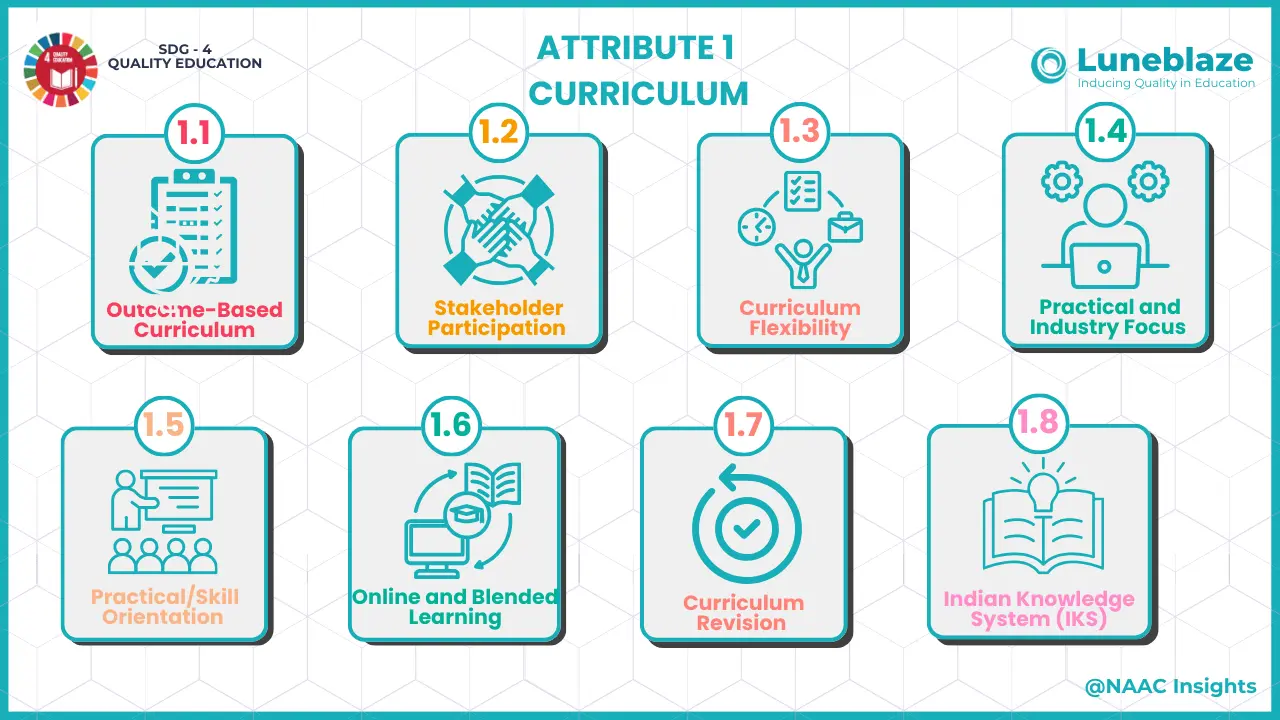
1.1 Outcome-Based Curriculum
The cornerstone of effective education lies in aligning curriculum frameworks with well-defined learning outcomes. HEIs are now required to ensure their curriculum integrates Program Outcomes (POs), Program Specific Outcomes (PSOs), and Course Outcomes (COs). This systematic alignment ensures clarity and direction, empowering students with measurable skills and competencies.
1.2 Stakeholder Participation
A curriculum designed in isolation often fails to meet the evolving demands of the real world. Recognizing this, NAAC emphasizes the involvement of diverse stakeholders—students, teachers, employers, alumni, and entrepreneurs—in curriculum development. This participative approach fosters relevance and inclusivity, though affiliated colleges are exempt from this criterion.
1.3 Curriculum Flexibility
Incorporating flexibility within the academic structure is pivotal to fostering creativity and adaptability. HEIs are encouraged to offer a plethora of options, including Multiple Entry-Multiple Exit (MEME), Academic Bank of Credits (ABC), elective courses, dual degree programs, education in the mother tongue, and inter-institutional credit transfers. Such flexibility equips students to tailor their learning experiences, preparing them for diverse career trajectories.
1.4 Practical and Industry Focus
Bridging the gap between academia and industry is another critical aspect. HEIs must incorporate a significant percentage of courses that emphasize field projects, research initiatives, internships, and hands-on training. This practical orientation ensures that students graduate with industry-ready skills and real-world experience.
1.5 Practical/Skill Orientation
Skill development, aligned with the National Skills Qualification Framework (NSQF), is integral to the curriculum. HEIs are encouraged to introduce skill-focused courses designed over the past three years, creating a workforce adept at meeting modern-day challenges. Affiliated colleges are, however, exempt from this requirement.
1.6 Online and Blended Learning In an era of digital transformation, online and blended learning is pivotal. HEIs are required to incorporate online courses—offered through platforms like SWAYAM—into their curriculum, with a focus on credit-based evaluation over the last three years. This ensures students are equipped with the flexibility to learn at their own pace while gaining exposure to global knowledge systems. 1.7 Curriculum Revision To remain relevant and effective, frequent curriculum revision is essential. HEIs must evaluate and update their programs and courses regularly, ensuring they address contemporary academic and industry demands. This iterative approach fosters innovation and responsiveness within educational systems. 1.8 Indian Knowledge System (IKS) Preserving and promoting India's rich heritage is integral to the new curriculum framework. HEIs are encouraged to integrate Indian Knowledge Systems (IKS) through certificate courses, workshops, and components within the core curriculum. Additionally, fostering student-led projects and research on IKS ensures a deeper appreciation of India's intellectual traditions. By embracing these comprehensive dimensions, HEIs can bridge the gap between traditional academic practices and the dynamic needs of a rapidly evolving world. This curriculum framework not only aligns institutions with global standards but also empowers them to cultivate graduates who are industry-ready, culturally rooted, and equipped to drive meaningful change. The pathway is clear—it's time for institutions to reimagine their academic offerings and embrace this transformative vision for higher education. To assist these efforts, Luneblaze provides a comprehensive end-to-end solution to HEIs for all their accreditation criteria needs. With the help of Luneblaze’s AI-enabled solutions, HEIs can organize and manage all their data related to accreditation.
Together, let's raise educational standards. Reach us at: naac@luneblaze.com