
Stiff Penalties Signal a New Accountability Era in Higher Education
Dec 16, 2025
India’s higher education regulatory framework is poised for a fundamental transformation, driven by a shift from advisory oversight to strict accountability and enforcement. Current government proposals under the Viksit Bharat Shiksha Adhikshan Bill are central to this change, introducing a robust regulatory architecture designed to enhance quality, transparency, and institutional performance.
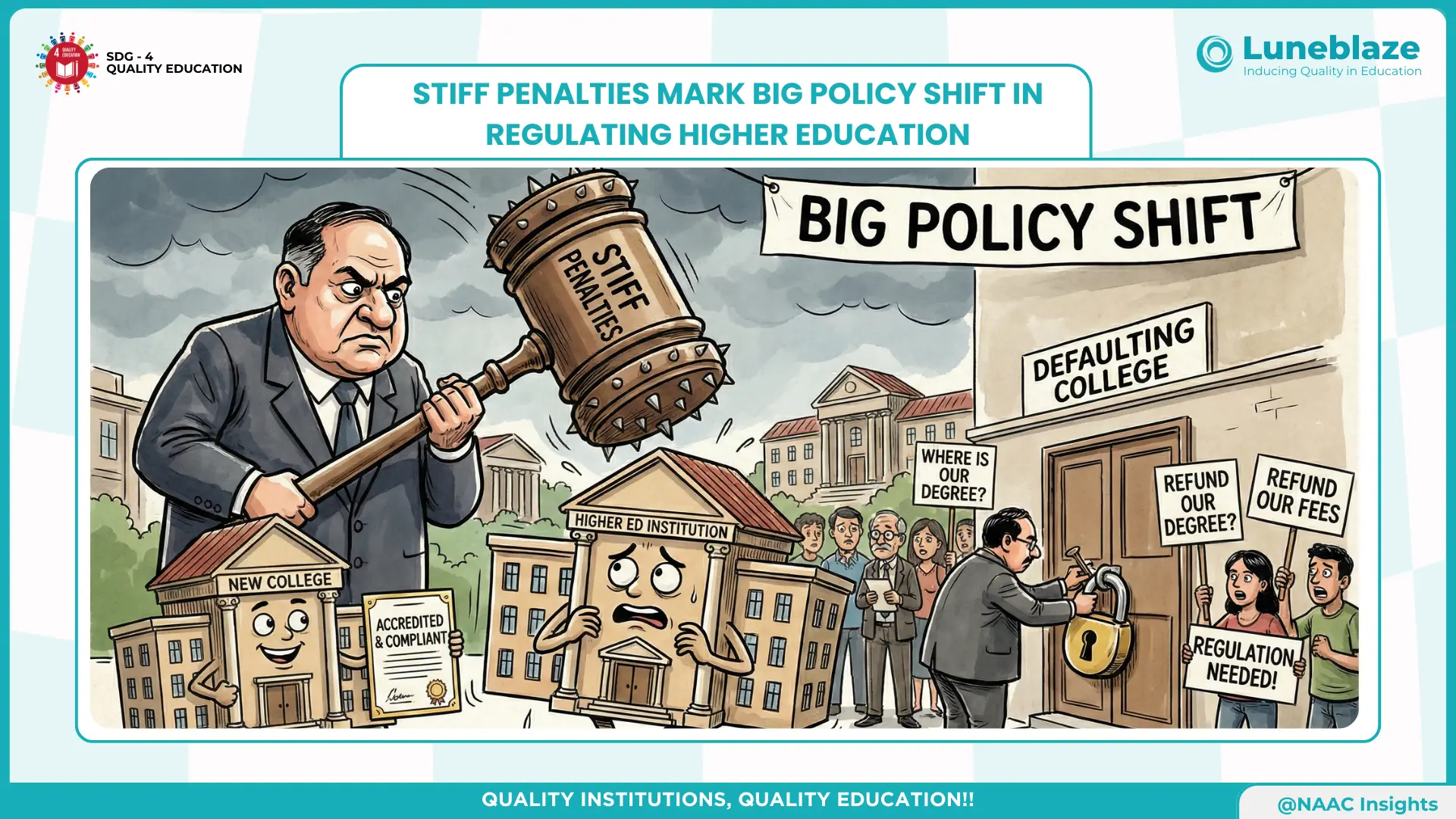
One of the most notable aspects of the proposed regulatory overhaul is the introduction of a graded penalty regime with sharply increased financial consequences and legal enforceability for regulatory violations. Under the new structure, institutions that fail to comply with regulatory provisions or repeatedly breach norms could face fines starting at Rs 10 lakh, escalating to Rs 30 lakh for repeat violations, and up to Rs 75 lakh for persistent non-compliance. In extreme cases, the regulator may also recommend suspension of degree-awarding powers, withdrawal of affiliation, or even closure of the institution. These penalties are a substantial escalation from the existing statutory framework, where fines under the UGC Act were capped at a nominal Rs 1,000.
For higher education institutions operating without government approval, the proposed law includes even more severe consequences. Unauthorized universities or institutions could be subject to a minimum Rs 2 crore fine and immediate closure, reflecting a decisive stance against unregistered or “fake” universities that previously continued to operate with limited deterrence.
To complement punitive measures, the Bill mandates mandatory public disclosure requirements. Institutions will be required to publish key information—such as financial statements, audit reports, faculty profiles, infrastructure details, course offerings, learning outcomes, governance structures, and accreditation status—on both their own websites and a central public portal maintained by the regulator. False, misleading, or incomplete disclosures can trigger regulatory action, and the regulator is empowered to initiate corrective steps within 60 days of identifying such issues.
The proposed framework also mandates the creation of a formal grievance redressal mechanism for students and stakeholders, ensuring that complaints related to academic or governance issues are addressed transparently and fairly.
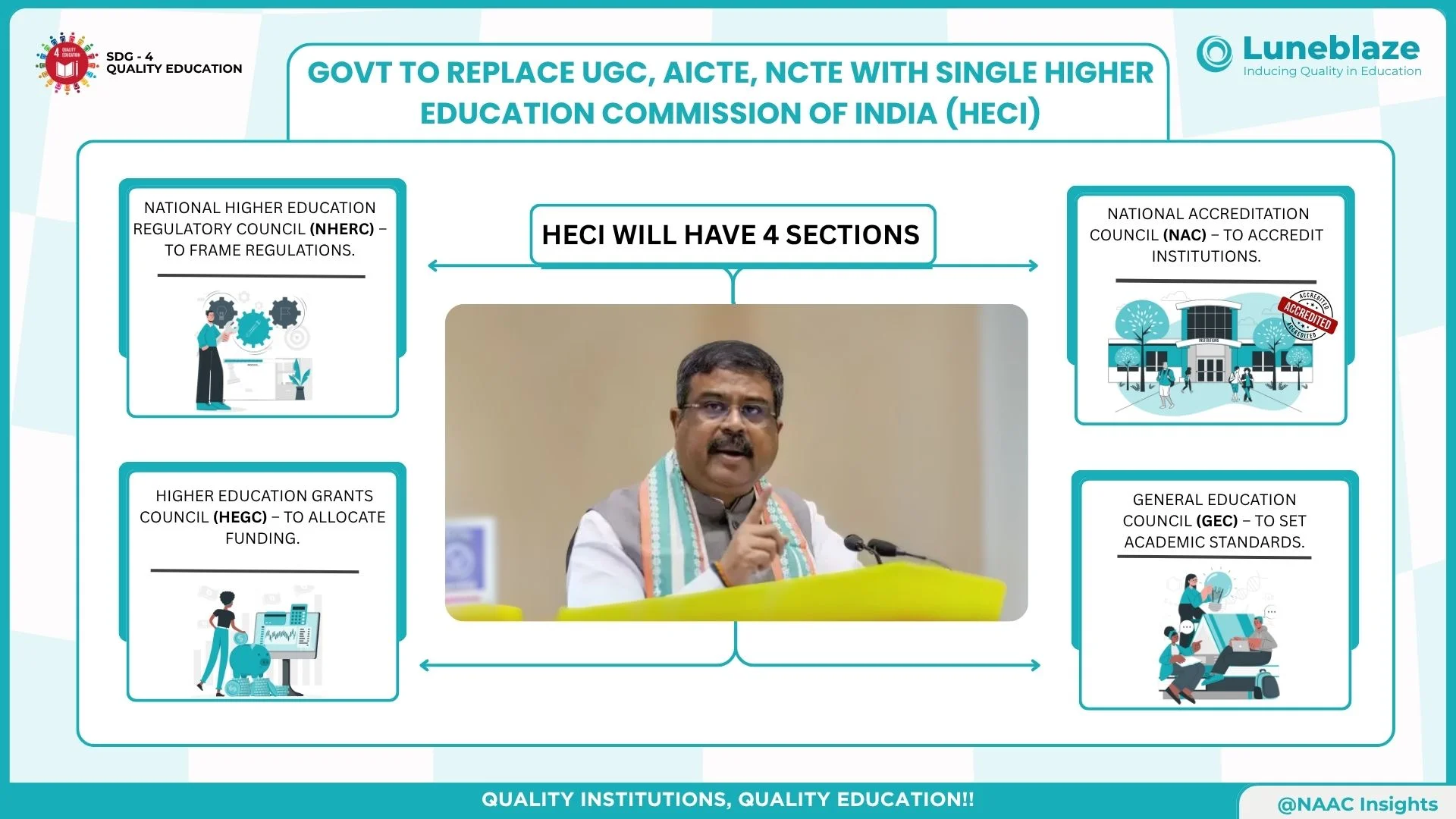
While the Bill aims to streamline regulation, it also raises significant structural changes. The new regulator will subsume the functions of the University Grants Commission (UGC), All India Council for Technical Education (AICTE), and National Council for Teacher Education (NCTE), but will not retain funding powers previously held by these bodies. Instead, grant disbursement and financial support mechanisms will be handled separately by the Ministry of Education, reinforcing the separation of regulation, accreditation, and funding as envisioned in the National Education Policy 2020.
These proposed reforms have triggered varied responses from stakeholders. Some educators and student groups have called for broader parliamentary scrutiny and deeper stakeholder consultation, expressing concerns that excessive centralisation and limited representation could impact institutional autonomy and governance diversity.
The combination of enhanced penalties, mandatory transparency, accreditation-linked autonomy pathways, and stronger enforcement signals a shift toward outcome-based regulation, where institutional credibility is tied not just to compliance documentation, but to performance, governance integrity, and data accuracy.
For higher education institutions, these developments underscore the urgency of strengthening internal governance systems, data management platforms, compliance monitoring mechanisms, and quality assurance processes. With regulatory reviews expected to become more frequent and evidence-driven, institutions will need to transition from reactive, periodic compliance to continuous readiness and proactive accountability.
The evolving regulatory environment marks a watershed moment for higher education in India, with accountability, transparency, and institutional responsibility at its core.
Source: The Times of India
Source: timesofindia.indiatimes.com
Latest News



Trusted by
100+
Institutions
worldwide
since 2017
Get started with Accreditation Excellence
Explore how our AI-enabled accreditation solution simplifies the accreditation journey