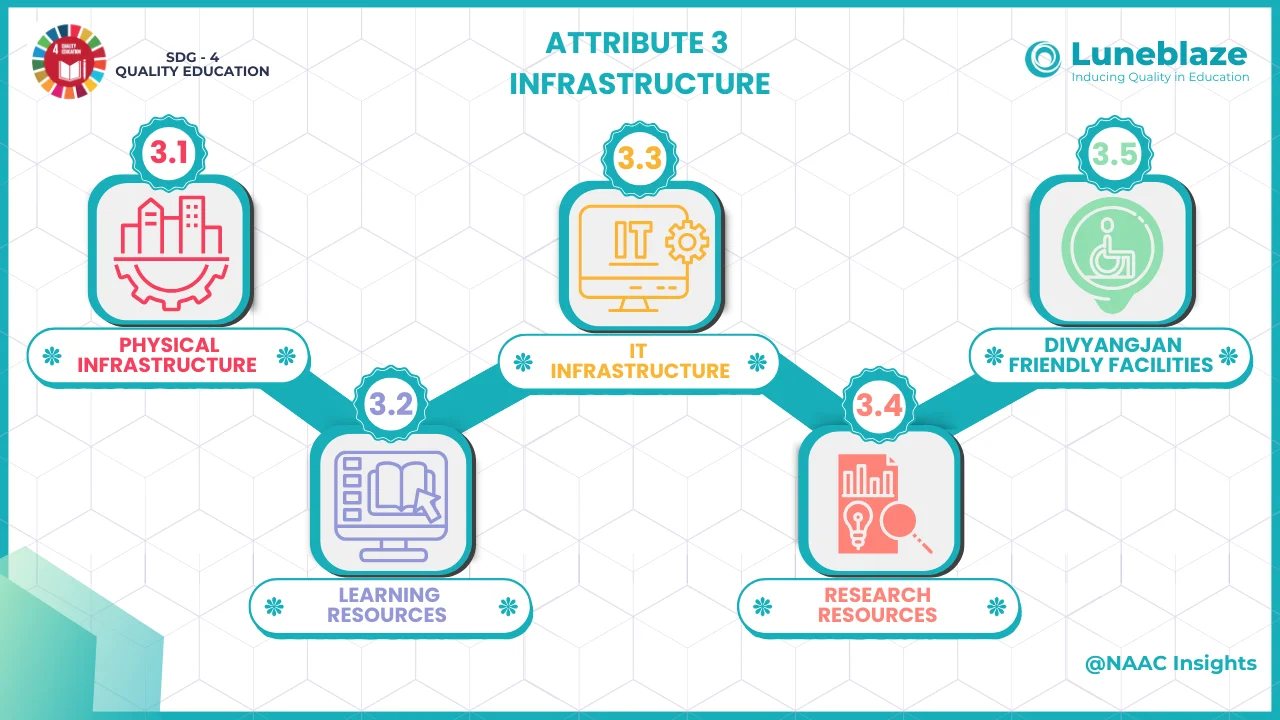
Imagine walking onto a well-kept campus with neatly paved walkways, a wide range of academic spaces, and a perfect mix of modern technology with traditional teaching methods. Picture a place where classrooms are designed for interactive learning, and students have easy access to well-equipped computer labs, libraries, and sports facilities. Now, think of an environment where technology enhances the educational experience, making it more engaging and flexible, through tools like online learning platforms and interactive digital resources. The physical and technological infrastructure of Higher Education Institutions (HEIs) plays a vital role in creating a dynamic learning atmosphere, driving academic excellence and innovation. Under the NAAC Binary Accreditation Framework, HEIs are assessed based on their infrastructure, ensuring that institutions maintain the appropriate facilities and technological tools that contribute to an enriched and effective learning environment. This framework emphasizes the importance of integrating both physical resources and digital technologies to enhance student engagement and learning outcomes. As HEIs strive to deliver quality education, an integral part of their success lies in the provision of adequate infrastructure. Whether it's classrooms designed for interactive learning, research resources supporting cutting-edge projects, or a sports facility where students can unwind, the environment plays a critical role in shaping the overall student experience. Let us explore the key elements of infrastructure that HEIs must invest in to foster an environment of learning, creativity, and growth. 3.1 Physical Infrastructure The physical infrastructure of any HEI lays the foundation for a comfortable and productive environment. Think about the classic lecture halls filled with eager students, the hum of computers in a well-equipped computer lab, or the spacious hostels where students can feel at home away from home. HEIs focus on offering a variety of facilities to create a balanced and enriching environment. Here are the key components: Classrooms/Lecture Halls: Spacious, well-equipped rooms for interactive learning, featuring modern tools like projectors, sound systems, and smartboards. Laboratories: Specialized spaces for practical learning, equipped with advanced tools for science, engineering, and technology courses. Workshops: Hands-on learning areas for skill development in engineering, design, and the arts. Hostels: Safe, comfortable accommodations for students, especially those from out of town or abroad. Computer Lab: A dedicated space with high-end computers and software to support student research, assignments, and technology-based courses. Sports Facilities: Diverse sports areas, including courts and tracks, to promote physical health and fitness. Grounds: Spacious outdoor areas for recreational activities and large campus events. Gymnasium: Well-equipped fitness centers with cardio machines, weights, and fitness accessories for student health. Auditoriums: Large venues for lectures, seminars, cultural events, and guest talks, with advanced audiovisual equipment. Seminar Halls: Smaller spaces for focused academic discussions, faculty meetings, and student presentations. Health and Wellness Center: On-campus facilities offering medical care, counseling, and wellness programs to support student well-being. Canteen: A social hub serving nutritious meals and snacks, offering a variety of food options for students and staff. Guest House: Comfortable accommodations for visiting faculty, researchers, and guest speakers contributing to academic life. Transportation Facilities: Reliable transport services for students and staff, ensuring easy access to the campus. Faculty Common Room: A dedicated space for faculty to relax, collaborate, and foster a sense of community. Separate Clean Washrooms for Girls and Boys: Well-maintained, private washrooms for both genders to ensure hygiene and comfort. Clean Drinking Water Facilities: Accessible, safe drinking water stations throughout the campus to keep students and staff hydrated. Adequate Lighting Facility: Well-lit spaces to ensure safety and productivity, especially during nighttime. Museum: On-campus museums showcasing academic collections, historical artifacts, and cultural exhibits. Artifacts (Academic/Non-Curriculum/Area): Various artifacts related to different academic disciplines and historical significance, offering a tangible learning experience. 3.2 Learning Resources A successful academic experience is only possible with access to rich learning resources. Books, e-books, and digital resources are the lifeblood of modern education. To stay ahead of the curve, HEIs must regularly invest in and update their libraries. This includes not only physical books but also subscriptions to digital resources, memberships to language labs, and e-book consortia. These resources offer students the latest research, academic journals, and access to global knowledge, enabling them to stay informed and engage in meaningful academic pursuits. Over the past few years, many HEIs have significantly increased their budgets for learning resources. The digital age requires an evolving library strategy, one that integrates both traditional and digital materials. As an example, average yearly expenditures on books, e-books, and digital resources are crucial in ensuring a rich academic environment. 3.3 IT Infrastructure The role of IT infrastructure in modern HEIs cannot be overstated. In today’s connected world, high-speed internet and robust IT systems are essential for delivering quality education. High-Speed and Reliable Internet: Fast, stable internet ensures seamless access to learning platforms and research. Effective Learning Management Systems (LMS): LMS platforms enable smooth content delivery, assignments, and communication. Virtual Labs/Classrooms: Virtual labs allow remote experiments and interactive learning. Technical Support for ICT Related Issues: IT support quickly resolves technical issues to keep learning on track. Computers: Modern computer labs help students complete assignments and research efficiently. Licensed Software: Access to licensed software ensures students have the right tools for their work. AR/VR: AR/VR tools provide immersive learning experiences, especially in technical fields. 3.4 Research Resources The growth of research at HEIs depends largely on the resources available for academic exploration. In recent years, many HEIs have focused on providing an extensive range of research resources: E-Library & Digital Journals: Access to online journals like ShodhSindhu and databases allows students and researchers to stay updated with global advancements. Plagiarism Check Software: Ensuring the integrity of academic work, plagiarism check software helps maintain academic honesty. Statistical Software & Discipline-Specific Tools: HEIs invest in licensed softwares or simulation software tailored to specific fields, enabling researchers to conduct high-level analysis. 3.5 Divyangjan friendly facilities HEIs are making significant strides in creating a barrier-free and inclusive environment for all students, including those with disabilities. The physical and technological infrastructure must accommodate students with diverse needs. Ramp/Lift Access: To ensure easy access to classrooms and facilities, HEIs provide ramps and lifts for wheelchair users. Divyangan friendly washrooms: HEIs maintain specialized washrooms and clear signage for the differently-abled. Signage including tactile path, lights, display boards and signposts: Assistive technology and facilities for Divyangjan- accessible website, screen-reading software, mechanized equipment: Websites, screen-reading software, and mechanized equipment ensure that students with disabilities can fully engage in their academic work. Provision for enquiry and information: Human assistance, reader, scribe, soft copies of reading material, screen reading. In light of these attributes, the role of infrastructure in HEIs is far more than just providing physical space. It's about creating an environment that supports and nurtures every aspect of student and faculty life. The integration of modern physical infrastructure, rich learning resources, IT systems, and accessibility features ensures that HEIs are ready to meet the demands of the future. With the right infrastructure in place, HEIs become vibrant hubs of learning, growth, and innovation, where students and staff can thrive and contribute meaningfully to the world. Investing in these resources is not only an investment in education but also in the future of society itself. To assist these efforts, Luneblaze provides a comprehensive end-to-end solution to HEIs for all their accreditation criteria needs. With the help of Luneblaze’s AI-enabled solutions, HEIs can organize and manage all their data related to accreditation, streamlining the process and ensuring compliance with national standards. Together, let’s raise educational standards. Reach us at: naac@luneblaze.com