Imagine stepping onto the campus of a Higher Educational Institution (HEI) – the vibrant energy of students, faculty, and staff working in harmony. Some students are deep in academic discussions within classrooms, while others experiment in state-of-the-art laboratories or work towards environmental sustainability through green initiatives. The air is filled with a sense of pride and progress, as the institution not only meets its immediate educational goals but also prepares for a sustainable and impactful future. This vision is what the National Assessment and Accreditation Council (NAAC) envisions for Higher Educational Institutions (HEIs) across India, as it prepares to launch its new Binary Accreditation Framework.
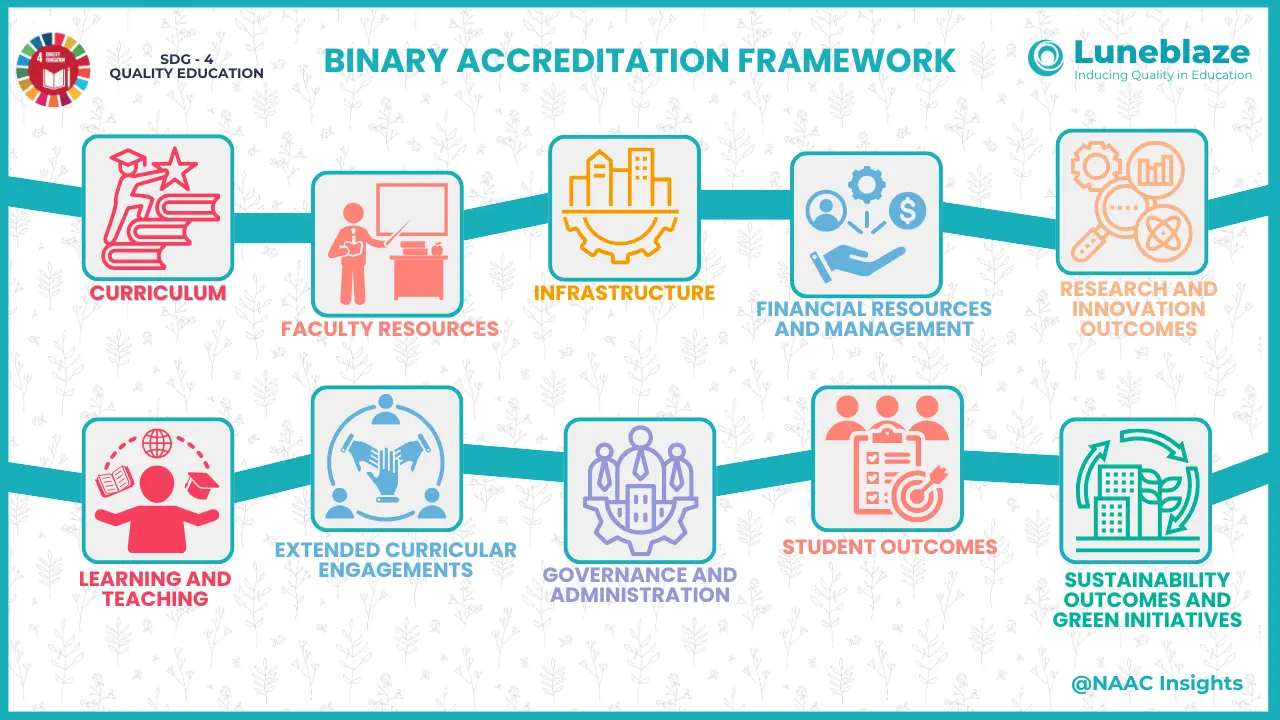
The Binary Accreditation Framework, designed to enhance the quality of education and institutional performance, aims to support HEIs in achieving holistic development and maintaining high standards across various domains. With this new framework, NAAC provides HEIs with a structured pathway to ensure their growth and excellence in every aspect of higher education. Let’s explore the ten key attributes that form the core of this revolutionary accreditation process.
Curriculum
The backbone of any academic institution lies in its curriculum, shaping students' learning and skill development. The Binary Accreditation Framework emphasizes the need for a dynamic, up-to-date curriculum that integrates real-world skills, interdisciplinary learning, and adaptability to global trends. HEIs must ensure their curriculum is relevant, engaging, and aligned with societal and industry needs, preparing students for the future.
Faculty Resources
The quality of teaching is directly influenced by faculty qualifications, experience, and development. The Binary Accreditation Framework emphasizes the need for HEIs to offer continuous professional development for faculty. A well-trained and motivated faculty ensures up-to-date teaching methods and high-quality education. HEIs will be assessed based on faculty expertise, commitment to innovation, and involvement in research and academic activities.
Infrastructure
An HEI’s infrastructure is pivotal to fostering a conducive learning environment. The Binary Accreditation Framework emphasizes the need for modern classrooms, libraries, laboratories, sports facilities, and digital resources. Strong infrastructure supports academic growth, extracurricular activities, innovation, and research. HEIs must also ensure accessibility for differently-abled students and integrate sustainability into campus design, promoting learning while considering environmental impact.
Financial Resources & Management Sustainable growth in any HEI requires robust financial management. The Binary Accreditation Framework highlights the importance of financial transparency, efficient fund utilization, and securing funding for research and development. A well-managed institution can offer scholarships, improve facilities, support faculty development, and invest in new technologies, enriching the overall educational experience. Financial health and resource management are crucial for the long-term success of an HEI. Learning & Teaching In the ever-evolving educational landscape, traditional teaching methods must be complemented with modern pedagogies. The Binary Accreditation Framework encourages HEIs to blend conventional and innovative practices, such as technology use, collaborative learning, interactive sessions, and personalized learning paths. A student-centered approach that promotes active engagement and critical thinking is key to ensuring students are actively involved in their learning journey. Extended Curricular Engagements Education extends far beyond the classroom, and the Binary Accreditation Framework recognizes this crucial aspect. It emphasizes the importance of activities like internships, field visits, community service, and cultural exchanges in student development. HEIs are encouraged to provide these experiences, which enhance knowledge and build leadership, communication, and interpersonal skills, preparing students to tackle global challenges. Governance and Administration An HEI’s governance and administrative systems must be structured, transparent, and responsive to ensure smooth functioning. The Binary Accreditation Framework evaluates the effectiveness of leadership, the governing body, and administrative processes. Ethical leadership and efficient management ensure effective policy implementation. Strong governance fosters a positive culture that supports both faculty and students, contributing to the institution’s success and reputation. Student Outcomes The success of any HEI is best reflected in the achievements of its students. The Binary Accreditation Framework emphasizes student outcomes, focusing on academic performance, employability, skill development, and personal growth. HEIs will be evaluated on how well their programs prepare students for the workforce, track alumni progress, and support lifelong learning. Institutions prioritizing student outcomes ensure graduates are ready to face future challenges and opportunities. Research and Innovation Outcomes A focus on research and innovation is crucial in today’s rapidly changing world. The Binary Accreditation Framework encourages HEIs to foster a culture of research, development, and creativity by supporting faculty and students, promoting interdisciplinary collaboration, and creating an environment for innovation. HEIs will be evaluated on their contributions to academic research, publications, patents, and industry partnerships, with these outcomes reflecting their impact on society and technological advancement. Sustainability (Green Initiatives) As environmental challenges grow, sustainability has become a key focus for institutions worldwide. The Binary Accreditation Framework highlights the importance of green initiatives in HEIs, such as eco-friendly campus designs, waste management, energy conservation, and water-saving practices. These efforts not only support environmental conservation but also inspire students to become responsible environmental leaders in their careers, ensuring a better future for all. In conclusion, the Binary Accreditation Framework marks a significant leap forward in improving the standards of Higher Educational Institutions (HEIs) across India. By focusing on these ten critical attributes NAAC provides HEIs with a comprehensive guide to elevate their educational offerings. This framework will empower HEIs to continuously improve, ensuring that they not only provide quality education but also prepare students to thrive in an increasingly complex and interconnected world. The Binary Accreditation Framework is not just an assessment tool; it is a transformative approach to shaping the future of higher education in India, fostering institutions that prioritize excellence, innovation, and sustainability at every level. To assist these efforts, Luneblaze provides a comprehensive end-to-end solution to HEIs for all their accreditation criteria needs. With the help of Luneblaze’s AI-enabled solutions, HEIs can organize and manage all their data related to accreditation.
Together, let's raise educational standards. Reach us at: naac@luneblaze.com